HISTORY | STORIES | BEYOND BLOG & CREATE PEOPLE |
Leist FamilyCoogee's Forgotten Artistic ClanArtistic Family Three Leist siblings were significant, if sometimes overlooked, figures in early 20th-century Australian art. They also had strong connections with Coogee and went onto make great contributions to the development of Australian art but remain largely forgotten in the public mind. They were:
All three were born in Surry Hills, the children of Edward Fredrick Leist (c1831 - 1899), and Harriet Eliza Leist nee Norris (d. 1910), who in turn were both born in London. Edward Leist was said to be a builder but he also ran the Tradesman's Inn hotel in Surry Hills, for which he was fined on serveral occasions for serving alcohol on a Sunday. Tragically for the Leists, three of their children died in infancy. On surviving daughter, Lavina b. 1862, married a Royal Navy officer, Alfred A. Barnes at St Michael's Church Surry Hills in 1888, and seems to have settled into a domestic life and disappeared from the record. But her three surviving siblings went onto make valuable contributions to Australian art. Eventually the family moved to a house at called "Verona" at 82 Ebley Street, Bondi Junction called "Vernon" (long since demolhised and replaced with an office tower). descfibed as a "Detached Brick House, having front veranda, enclosed balcony, hall, 5 rooms, kitchen, laundry, bathroom, etc." Edward Leist was living here when he died in 1899. By the late 19th century, the family was living at a property called "Araluen" at 9 Carr Street, Coogee, and when Harriet died there in 1910, it seems to have been acquired as the home for daughter Florence Leist, while Emily lived on the other, northern, side of Coogee.
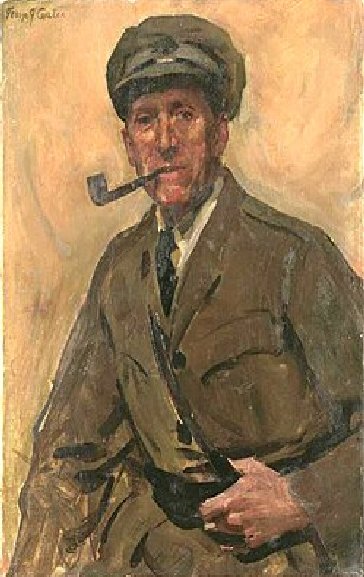
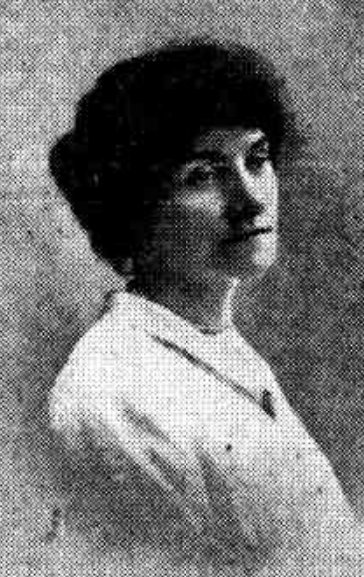 Fred Leist (c.1925) by George James Coates & Emily Leist, contemporary newspaper image, 1915
Frederick William Leist Frederick Leist married Ada Roberts at Moore Park in February, 1898. At the start of the First World War Leist was an expatriate living and working in London as an illustrator for the Graphic magazine. At first, he worked for British War Office and H. M. Stationery Office designing recruitment posters from 1915-1916. At some stage, he was also using his artistic skills to interpret aerial photographs to evaluate the efficiency of German camouflage. Then, in 1917, he became one of ten Australian artists living in Britain to be appointed official war artists. Leist was attached to the 5th Australian Division as an honorary lieutenant from 3 September 1917 until 31 March 1920. He was at the Western Front from September to December 1917 and again from June to August 1918, this time working alongside fellow artist A. Henry Fullwood. His skill as a draughtsman and ability to work quickly en plein air gave an insightful impression of life at the front line for Australian soldiers, the Belgium and French civilians living alongside them, and the battle ravaged landscape. Leist's work was included in Australia in The War, an exhibition of paintings and photographs by Australian war artists at the Grafton Gallery, London, 25 May - 22 June 1918 and designed the lithographic poster used to promote the exhibition. Other exhibiting artists included Charles Bryant, George Lambert, Frank Crozier, H. Septimus Power and James Quinn. He was also commissioned by the Australian War Records Office to produce several large paintings depicting key moments in the third battle of Ypres and the capture of Mount St Quentin. Later in 1927 Australian War Records had him paint the sinking of HMT Southland. After his war service he painted two large murals for the Australian Pavilion at the British Empire Exhibition held at Wembley in 1924. As a result of these works Leist gained several commissions in the United States and toured the south-west before returning to Australia in 1926. In 1929 Leist became the Head of Painting at East Sydney Technical College and remained so until 1938. Though conservative in style, Leist was a prolific artist and a much sought after portraitist. Perhaps his most famous work is his portrait of Sir Earl Page (1880 - 1961), the Country Party politician and Prime Minister for a short period in 1939. Leist's work is represented in the collections of state and regional public galleries including the National Gallery of Australia, the Art Gallery of NSW and the Australian War Memorial art collection. He was a member of the Royal Art Society of NSW and the Australian Watercolour Institute.
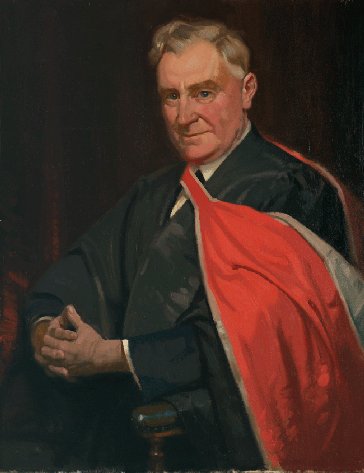
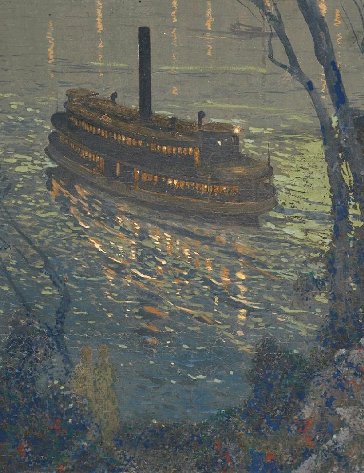 Portrait of Sir Earle Page by Frederick Leist, 1940 & The Mosman Ferry by Frederick Leist Frederick Leist was a versatile artist whose work spanned portraiture, war art, murals, and impressionist landscapes, often infused with narrative and emotional depth. His Impressionist leanings, especially in works like Mosman Ferry, he captured light and mood with soft brushwork and a rich colour palette. His portraits show a refined realism and sensitivity to character. Leist's work tend to sell at around $4,000 each, with an auction record of about $US14,000. Frederick Leist died at Mosman of cerebral thrombosis in February 1945, and was survived by his wife Ada (d. 1947) and a married daughter Dorothy Hichen.
Emily Leist In a 1915 profile by the Sunday Times, it noted that she was living:
On the Heights of Coogee, overlooking Bishopscourt, with an incomparable view of wooded valley, of retiring Little Coogee, nestling at the foot of the sandy hills, and the gleaming waters of the Pacific ceaselessly washing its shores, I found Miss Emily Leist, Sydney's well-known brass and copper repousse artist. She was hard at work in her pretty veranda studio and workshop ... Emily spent most of her childhood in Waverley, and the article went on to say she inherited her artistic gifts from her mother, a member of a family whose members included "very clever" black and white and artists and well-known watercolourists. Unable to pursue her own talents because of the call of family duties, Harriet Leist encouraged the artistic endeavours of her children. Emily studied at the Sydney Technical College (now the National Art School) where she excelled in repousse (metalwork hammered into relief from the reverse side). Inspired by native flora, she took sheets of copper plate and hammered them into pieces of decorative art such as plaques, trays, bowls, and vases in the art-noveau style.
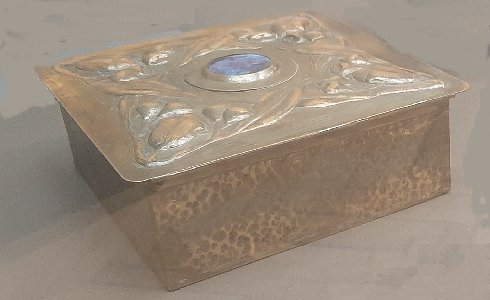 Emily Leist beaten brass casket with repousse decoration, 1910 She used native motifs of gumnuts, gums leaves and beetles, with an inlaid blue enamel medallion. On display at AGNSW. Emily Leist was a remarkable, yet as with many Australian women artists, an often overlooked figure in early 20th-century Sydney’s art scene. Her work was exhibited with the Society of Arts and Crafts of NSW between 1909 and 1914. The Art Gallery of NSW holds several of her pieces, including a copper plate from circa 1910, showcasing her refined technique and design sensibility. She is also listed in the National Gallery of Australia’s collection database, though her works are rare and not widely circulated.
Florence Leist Florence was a member of the Society of Arts and Crafts of NSW, a group that championed handcrafted design and Australian motifs. Her work likely included hand-built earthenware in line with the movement’s emphasis on natural materials and individual craftsmanship. Though specific surviving pieces are rare, through her association with the Society she contributed to exhibitions and produced functional ceramic - vases, bowls, or decorative item infused with native flora or stylised forms. The early 1900s saw a surge in studio pottery in Australia, often led by women working from home studios. These artists blended British craft traditions with a growing sense of Australian identity, using local clays and motifs. Florence’s work would have paralleled that of contemporaries like Eirene Mort, who advocated for a distinctly Australian design language rooted in nature and national pride. Her creative output, like that of many women artists of the time, was often overshadowed by male counterparts or confined to domestic spheres, yet it helped shape the aesthetic foundations not only of Australian studio pottery, but the decorative arts in general. Florence of died of heart failure in 1919, an artistic life cut short by illness. References
|
Copyright © Coogee Media All rights reserved
| CONTACT US | ABOUT US |