HISTORY | STORIES | BEYOND BLOG & CREATE PEOPLE |
Ranville Ashmore Popplewell - Randwick MayorImportant figure in Coogee politics from 1950 to 1971Ranville Ashmore Popplewell was born in the inner Sydney suburb of Marrickville on 26th August 1910, the son of Hiram and Ethel M. (nee Cummings) Popplewell. Usually known as "Snowy" Popplewell, he was leading conservative voice in local Coogee politics from the early 1950s through to the early 1970s. Representing East Ward (based on Coogee) he was an Alderman in 1954 to 1956, 1960 to 1971 and Deputy Mayor from 1953 to 1954. He served as Mayor of Randwick in 1956 to 1957 and then from 1970 to 1971.
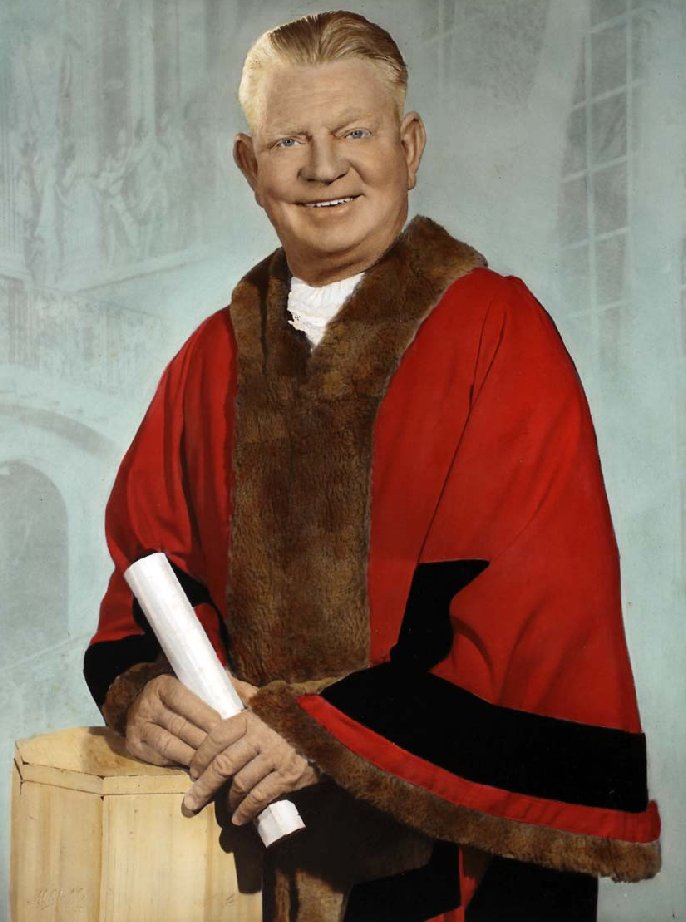 Ranville Ashmore Popplewell in Randwick Mayoral Robes
Becomes a Builder
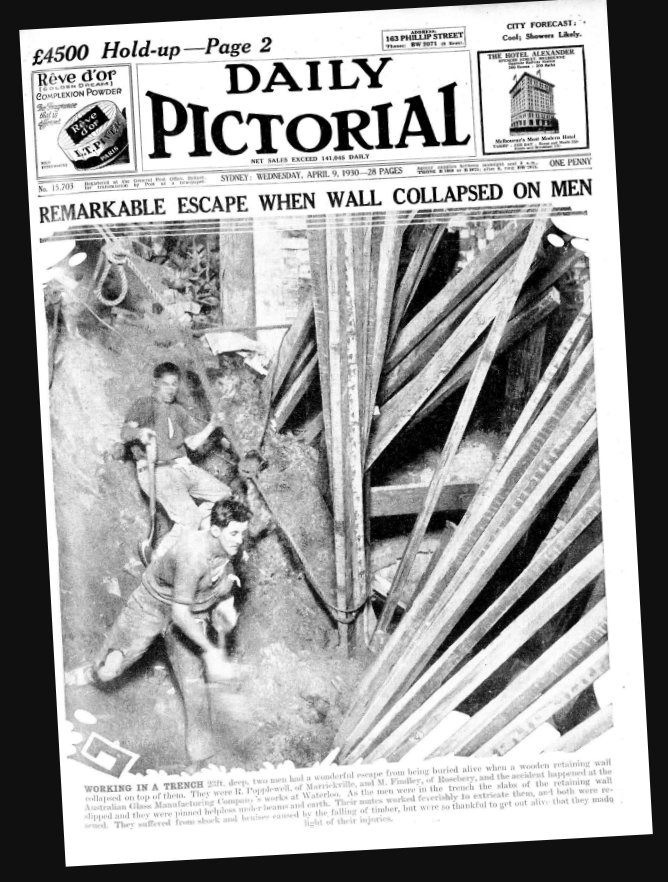
Newspaper article of 1930 showing workers rescuing Ranville Popplewell from building collapse
It must have been a traumatic experience for the 20 year old, but by 1937 he was in a position to be running a building firm of his own advertising for bricklayers to work on a building site at Parramatta Road, Ashfield. Thereafter, his appears frequently in newspaper advertisements until the 1960s calling for the employment of carpenters, bricklayers and other tradesmen for his for his building sites Coogee and other parts of the Eastern Suburbs. He was sometimes described in the press as being a "master builder from Pagewood", so likely had an office there.
Community Hotel - a hot button issue Many in the local community were bitterly opposed to the concept. The liquor trade feared it would impact on their business, while temperance groups and their supporters wanted nothing to do with anything they felt would popularise alcohol consumption. Another stream of opposition came from local small business people who wanted Council to concentrate traditional municipal services and policies that would promote local business. Any government involvement in commercial activities was an anathema to them. Local businesses mounted a sustained campaign against the community hotel concept and one of the leaders in this campaign was local builder Ranville Popplewell. Popplewell and his supporters took all legal opportunities, up to a High Court appeal, in an effort to have the hotel's license invalidated. Ultimately opposition to proposal, though perhaps not in the majority, became too onerous for the Council and eventually dropped the idea.
Enters Politics Popplewell was interested in promoting and aiding local business, including with issues like parking especially for delivery people and tradesmen. He was active in the local bowls community and was a supporter of returned servicemen's organisations like the local R.S.L and Legion clubs. His obituary said that he had served in New Guinea, presumably during World War Two, but I could not locate his records on the Australian War Memorial or National Archives of Australia websites.
Personal Life Popplewell died on 11 December 1985. He is buried at Randwick General Cemetery at South Coogee along with his wife Clementine (who died on the 14th April 1997) and his mother, Ethel. (Catholic sect. select A55a).
Popplewell Park
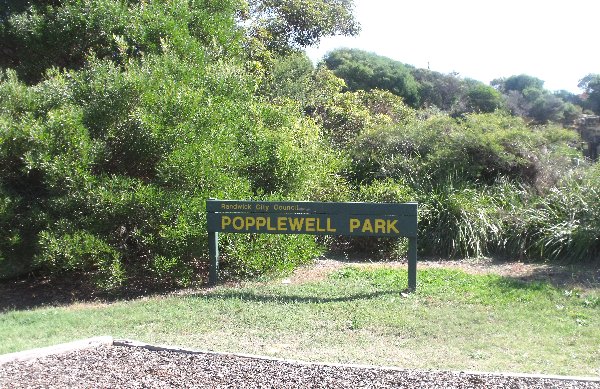 Popplewell Park, South Coogee Bounded by Gregory Street and Malabar Road in South Coogee, Popplewell park is divided into two sections The upper section running along Gregory Street, has a small playground and seating, and is adjacent on the north side to St Paul's South Coogee Anglican Church. The dramatic cliff face which divides it from the lower section is fenced for safety and features a long stretch of native tree and shrub plantings as a "bush regeneration" project. The lower section fronts Malabar road and is notable for its rocky sandstone outrcrops. From 1960 to 1980, part of the land on which the park is located hosted the Garrett's Squash Centre which was operated by the Australian squash champion Jack Garret. The concrete foundations from the demolished buildings are still visible. There is a small hall located on the lower northern side of the park which was once a scout hall, called "Totem Hall". It is owned by Randwick Council which can, according to a sign on the building, be rented by residents for community functions.
References
|
Copyright © Coogee Media All rights reserved
| CONTACT US | ABOUT US |